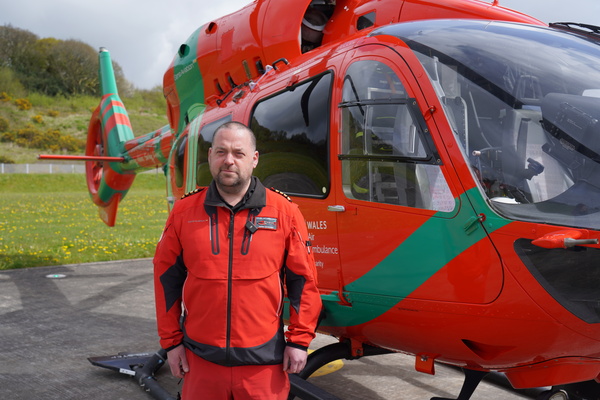
Wales Air Ambulance Charity is asking for support to help keep its lifesaving helicopters flying, after facing a significant increase in aviation fuel costs linked to the war in the Middle East.
Even if the conflict in the Middle East were to end in the coming days, the Charity would still face additional costs in the region of £50,000 due to sustained increases in aviation fuel prices.
Every day, the Charity’s crews respond to some of the most serious medical emergencies in Wales – reaching people who are critically ill or seriously injured. This often requires long-distance flights, taking medics to the patients and then transporting them to specialist hospitals in Wales and England for the urgent care they need.
Wales Air Ambulance pilot, Captain James Gardiner, said: “Every time we take off, we know someone on the ground is relying on us during one of the worst moments of their life. Fuel isn’t just a cost for us – it’s what allows us to take our A&E-standard care to patients, wherever they are in Wales, and then take them to the most appropriate specialist care centre for their needs.
“When fuel prices rise this sharply, it has a real impact. The support we receive from the public genuinely helps keep us flying, and we’re incredibly grateful to everyone who makes this service possible.”
Since the start of the conflict in the Middle East, the Charity’s fuel costs have increased significantly, at the same time as air ambulance helicopter use traditionally rises.
Spring and summer bring longer daylight hours and better weather conditions, leading to an increase in flying hours. The Charity is asking supporters to consider donating – however small – to help cover these exceptional fuel costs and ensure crews can continue to respond whenever the call comes.
Wales Air Ambulance is consultant-led, taking hospital-standard treatments to the patient and, if required, transferring them directly to the most appropriate hospital for their illness or injury. It is delivered via a unique third-sector and public-sector partnership.
The Wales Air Ambulance Charity relies on public donations to raise the £13 million required every year to keep the helicopters in the air and rapid response vehicles on the road.
The Emergency Medical Retrieval and Transfer Service (EMRTS) supplies highly skilled NHS consultants and critical care practitioners who work on board the Charity’s vehicles.
This advanced critical care includes the ability to administer anaesthesia, deliver blood transfusions and conduct minor operations, all at the scene of an incident.
As a pan-Wales service, its dedicated crews, regardless of where they are based, will travel the length and breadth of the country to deliver emergency lifesaving care.
Dr Sue Barnes, Chief Executive of the Wales Air Ambulance, said: “The war in the Middle East has created an unexpected and, we hope, temporary challenge. Rising fuel costs are a serious issue for air ambulance charities across the UK and reflect global factors beyond our control.
“Global fuel markets do not respond instantly to geopolitical change, and we anticipate that any reduction in costs following the end of the war would be gradual and spread over a prolonged period. This means the financial impact on the Charity would continue well beyond the immediate end of the conflict.
“When someone’s life is at risk, our crews must be ready to fly, no matter the distance or the time of day.
“While we carefully manage these increases, we are also asking supporters, if they are able, to help us mitigate this exceptional rise in fuel costs.
“We know that many people across Wales are facing rising costs in their own lives, and we don’t take lightly the decision to ask for help.”
To find out more and to donate, please visit: https://www.walesairambulance.com/fuel-cost-appeal